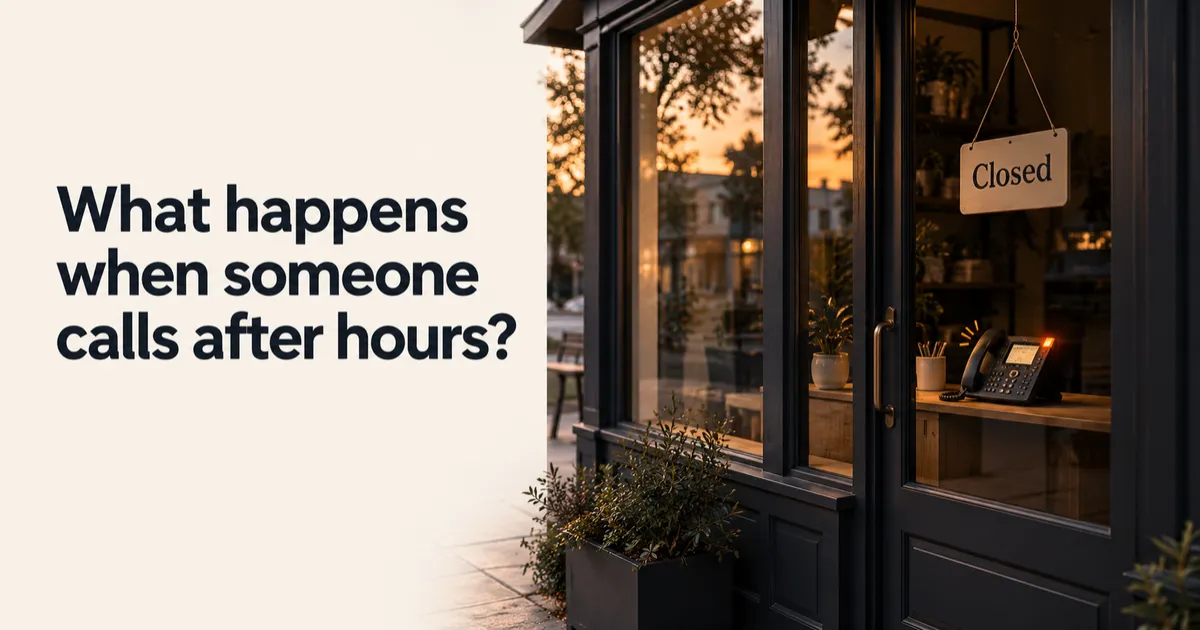
What happens when someone calls your business after hours?
Call your own business line tonight at 7:30. Listen to what a customer hears.
For most of the owners I work with, it's a greeting recorded years ago, a mailbox that may or may not be full, and a promise to return the call "as soon as possible." Some don't have a greeting at all. The phone just rings until it gives up.
Now picture the person on the other end. A pipe burst. A family member was arrested. The AC quit in July. They're calling you because they need help tonight or first thing tomorrow, and they have a list of other numbers to try.
Most callers won't leave a message
People leave fewer voicemails than they used to. If nobody answers, a lot of callers hang up and dial the next business on the search results. You never find out they called, unless you check the missed-call log, and by the time you call back they've already made a plan.
I see this pattern in almost every business I look at. The owner thinks after-hours calls are rare. Then we pull the call log and find a steady stream of missed calls in the evening and on weekends, many from numbers that never called again.
What callers expect now
People don't expect a business to be open at midnight. They do expect three things:
- To reach something that answers. A real response, even if it isn't a person, beats a ringing phone.
- To know what happens next. When will someone call? Can they book a time now?
- To not repeat themselves. If they explained the problem once, they don't want to explain it again tomorrow.
A voicemail box only covers the first one, and barely.
The options, from simplest to most complete
Missed call text back. When a call goes unanswered, the caller receives a text within seconds: "Sorry we missed you, how can we help?" This alone saves a lot of leads, because the conversation keeps going by text and you reply when you're free.
An answering service. A live person takes a message. It works, but it costs more, the people answering don't know your business well, and most of them can't book an appointment.
An AI phone assistant. This is where most of my clients end up. The assistant answers in a natural voice, tells the caller up front that it's an AI, answers common questions about your services and hours, and can book an appointment right on your calendar. After the call you receive a summary of who called, what they needed and what was booked.
What an AI phone assistant should and shouldn't do
A good one is honest and limited on purpose. It should:
- Say it's an AI assistant at the start of the call
- Answer the questions you've approved, in your words
- Book appointments or take a detailed message
- Send you a summary right after the call
It shouldn't quote prices you haven't approved, give legal or medical advice, or pretend to be a person. When a caller needs something it can't handle, it takes a message and lets them know when you'll be in touch.
Hear one for yourself
We use one on our own main line. Call 813-491-9777 any time, day or night, and you'll reach our AI assistant. Ask it what we do or have it book a time. It's the same kind of setup we build for clients.
Then do the same test on your own number tonight. If what you hear would send you to the next business on the list, that's worth fixing before your busy season.
We'll run that test for you for free. We call your business after hours, see what a caller experiences, and send you a short report on what we found.
Get your free after-hours call test
Michele Margetts runs Solution1, which builds websites, follow-up systems and AI assistants for small businesses. She has spent decades on the operations side of businesses in law, real estate, restoration and hospitality.
